Perforated Cable Trays: Why Your Facility Needs Better Cable Organization
📋 Table of Contents
- 1. What Are Perforated Cable Trays?
- 2. Common Cable Management Problems in Facilities
- 3. Top 8 Benefits of Perforated Cable Trays
- 4. Superior Ventilation - The Game Changer
- 5. Where Perforated Trays Excel - Applications
- 6. Perforated vs Other Tray Types
- 7. How to Select the Right Perforated Tray
- 8. Real-World Case Study
- 9. Frequently Asked Questions
1. What Are Perforated Cable Trays?
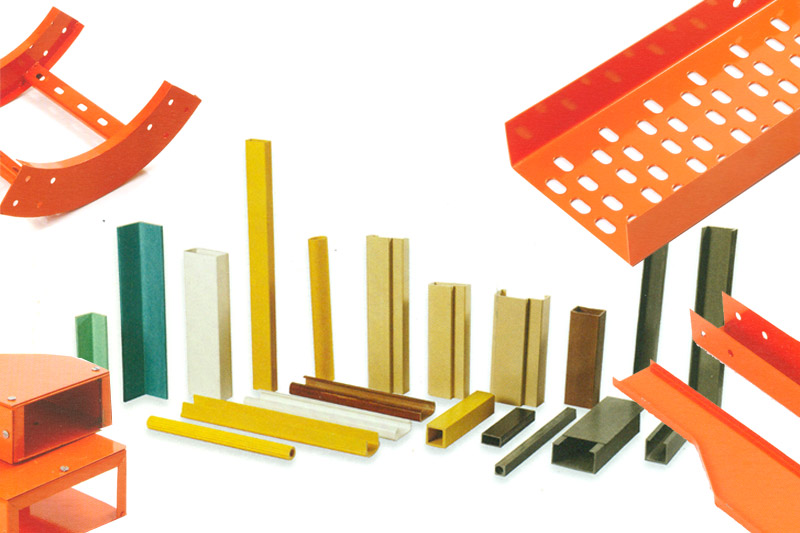
Perforated Cable Trays are cable management systems featuring a solid bottom design with strategically placed perforations (holes) throughout the base. These perforations typically cover 30-40% of the tray surface, providing the ideal balance between structural integrity and ventilation. The perforation pattern can be rectangular slots, round holes, or square openings, depending on the application requirements.
When manufactured using FRP (Fiber Reinforced Plastic), these trays combine the organizational benefits of perforated design with the superior material properties of composites - corrosion resistance, lightweight construction, fire retardancy, and longevity.
Learn more about ladder type alternatives if you have specific heavy-load requirements, or continue reading to understand why perforated trays might be your ideal solution.
Key Design Features
- Solid Bottom with Perforations: Provides cable support while allowing airflow
- Reinforced Side Rails: Maintain structural integrity under load
- Standard Perforation Patterns: 30-40% open area for optimal performance
- Modular Construction: Standard lengths (2.4m or 3m) for easy handling
- Variable Widths: Available from 50mm to 900mm
2. Common Cable Management Problems in Facilities
Before highlighting solutions, let's identify the problems that drive facility managers to seek better cable management:
🔥 Top Facility Cable Management Problems
- Heat Buildup: Cables overheating due to poor ventilation
- Cable Damage: Mechanical stress, abrasion, and crushing
- Maintenance Difficulty: Hard to identify, trace, or replace specific cables
- Safety Hazards: Exposed wiring, fire risks, electrical shorts
- Aesthetic Issues: Unprofessional appearance affecting facility audits
- Compliance Problems: Failing electrical inspections
- Future Scalability: No room for adding new cables
- Documentation Chaos: Unable to track which cable goes where
3. Top 8 Benefits of Perforated Cable Trays
1. Excellent Heat Dissipation
The 30-40% perforation creates natural airflow channels, allowing heat from cables to dissipate efficiently. This prevents cable insulation degradation and extends cable lifespan by up to 30%.
2. Reduced Cable Sag
Unlike ladder trays where cables can sag between rungs, the solid bottom with perforations supports cables uniformly, eliminating stress points and reducing cable insulation damage.
3. Easier Cable Routing
The flat surface allows smooth cable laying, easier organization, and simpler additions of new cables in the future. Cables don't need to be "threaded" between rungs.
4. Better Protection
The perforated bottom provides some protection against falling debris, dust accumulation, and accidental damage while maintaining ventilation.
5. Aesthetic Appeal
The uniform, organized appearance enhances facility professionalism and is often preferred for visible installations in commercial spaces, hospitals, and offices.
6. Cost-Effective Mid-Range Solution
Perforated trays sit between basic channel trays and heavy-duty ladder trays in cost, making them an economical choice for moderate-load applications.
7. Versatile Application Range
Works equally well for power cables, control cables, and communication cables (with proper separation), making it ideal for facilities with mixed cable types.
8. Easy Inspection and Maintenance
The perforated design allows visual inspection of cables from below, making maintenance and troubleshooting significantly easier.
4. Superior Ventilation - The Game Changer
Ventilation is perhaps the most critical advantage of perforated cable trays. Here's why it matters:
Heat Impact on Cable Performance
| Operating Temperature | Cable Lifespan Impact | Current Capacity |
|---|---|---|
| 30°C (Normal) | 100% (25+ years) | 100% |
| 45°C | 80% (20 years) | 90% |
| 60°C | 50% (12 years) | 75% |
| 75°C | 25% (6 years) | 60% |
| 90°C+ | 10% (2-3 years) | 40% (Risk!) |
💡 Energy Savings Insight
Proper ventilation through perforated cable trays can reduce cable heating by 15-25°C, allowing cables to operate at higher current capacities and significantly reducing energy losses (I²R losses) in the system.
5. Where Perforated Cable Trays Excel - Applications
Industrial Manufacturing
- Automobile manufacturing plants (Maharashtra, Indonesia, China)
- Textile factories (Bangladesh, India)
- Electronics production facilities (Vietnam, Philippines)
- Food and beverage processing plants
Healthcare Facilities
- Hospitals (non-magnetic - safe near MRI rooms)
- Clinics and medical centers
- Pharmaceutical manufacturing
- Laboratories and research facilities
Commercial Buildings
- Shopping malls and retail spaces
- Office complexes and IT parks
- Hotels and hospitality
- Educational institutions
Infrastructure Projects
- Metro and railway stations (DMRC, Mumbai Metro)
- Airports and transportation hubs
- Government buildings
- Utility substations
6. Perforated vs Other Tray Types
| Feature | Perforated | Ladder Type | Trough Type | Channel Type |
|---|---|---|---|---|
| Ventilation | Good (30-40%) | Excellent (60%+) | Poor (Closed) | Good |
| Cable Support | Excellent | Good | Excellent | Moderate |
| Load Capacity | 40-120 kg/m | 50-200 kg/m | 30-100 kg/m | 10-50 kg/m |
| Cost | Mid-range | Higher | Mid-range | Lowest |
| Best For | General purpose | Heavy duty | Enclosed protection | Light loads |
| Protection | Good | Minimal | Excellent | Minimal |
For a detailed comparison between ducts and open trays, explore our comparison article.
7. How to Select the Right Perforated Cable Tray
Step 1: Calculate Cable Load
Add up the weight per meter of all cables to be carried. Include 25% future expansion capacity.
Step 2: Determine Tray Width
| Number of Cables | Recommended Width |
|---|---|
| 1-3 cables (small) | 50-100mm |
| 4-8 cables | 150-200mm |
| 9-15 cables | 300mm |
| 16-25 cables | 450mm |
| 26-40 cables | 600mm |
| 40+ cables | 750-900mm |
Step 3: Choose Material Grade
- Standard FRP: General indoor/outdoor use
- Fire Retardant FRP: Required for safety-critical areas
- Chemical Resistant FRP: Chemical plants, refineries
- UV Stabilized FRP: Outdoor installations
Step 4: Plan Accessories
Don't forget essential fittings and accessories like bends, couplers, reducers, and supports.
8. Real-World Case Study
📊 Case Study: Mumbai Metro Project
Challenge: Cable management for a major metro station with 5,000+ cables, requiring proper ventilation, fire safety compliance, and 25+ year durability.
Solution: Sharda Cable Trays supplied 8,000+ meters of Perforated FRP Cable Trays in various widths (150mm to 600mm), along with custom accessories.
Results:
- 30% faster installation compared to GI alternatives
- 40% reduction in heat-related cable issues
- Zero corrosion issues after 5 years of operation
- Maintenance costs reduced by 65%
Ready to Upgrade Your Facility's Cable Management?
Join 500+ facilities across India, Indonesia, Saudi Arabia, UAE, Nigeria, and more that have transformed their cable management with Sharda Perforated FRP Cable Trays. ISO 9001:2015 certified, MSETCL & Maha-Metro approved.
📞 Request Quote View Products9. Frequently Asked Questions
Q1: What are perforated cable trays used for?
Perforated cable trays are used for organizing and supporting electrical and communication cables in industrial facilities, commercial buildings, data centers, hospitals, and factories. The perforated design provides excellent ventilation for heat dissipation, easy cable routing, and supports moderate cable loads (50-100 kg/m).
Q2: How do perforated cable trays differ from ladder type trays?
Perforated cable trays have a solid bottom with holes (perforations) for ventilation, while ladder trays have an open rung-style bottom. Perforated trays provide better cable support for smaller diameter cables, prevent cable sag between supports, and offer some protection from falling debris while still allowing airflow.
Q3: What is the load capacity of perforated FRP cable trays?
Standard Perforated FRP Cable Trays support 40-120 kg/m depending on width (50mm to 600mm) and material thickness. For specific load calculations, refer to manufacturer specifications and ensure proper support spacing of 1.5-2.5 meters.
Q4: Can perforated cable trays be used outdoors?
Yes, Perforated FRP Cable Trays are excellent for outdoor use due to their UV-stabilized resin, corrosion resistance, and weather-proof properties. They work well in tropical climates, coastal areas, deserts, and industrial outdoor installations.
Q5: What is the perforation percentage in cable trays?
Standard perforated cable trays have a perforation percentage of 30-40%, providing optimal balance between ventilation, structural strength, and cable support. The perforations are typically rectangular or round, sized 15-25mm in dimension.
Q6: Are perforated trays suitable for hospitals?
Yes, perforated FRP cable trays are highly suitable for hospitals and healthcare facilities. They offer non-magnetic properties (safe near MRI), fire-retardant features, easy cleaning, and meet healthcare facility hygiene standards.
Q7: What is the price range of perforated cable trays?
Perforated FRP cable trays range from ₹400-₹4,500 per meter depending on width, thickness, and quantity. Contact Sharda Cable Trays for detailed quotation and bulk pricing.
Get Expert Consultation
Manufacturing excellence from Pune, India to global markets. ISO certified quality, competitive pricing, on-time delivery.
Send Enquiry 📞 Call: +91 77750 95888