Complete Guide to Cable Tray Accessories: Bends, Couplers, Reducers & More
📋 Table of Contents
1. Cable Tray Accessories Overview
Cable tray accessories transform basic tray sections into complete, functional cable management systems. Without proper accessories, even premium trays cannot navigate building obstacles, change direction, or connect to equipment.
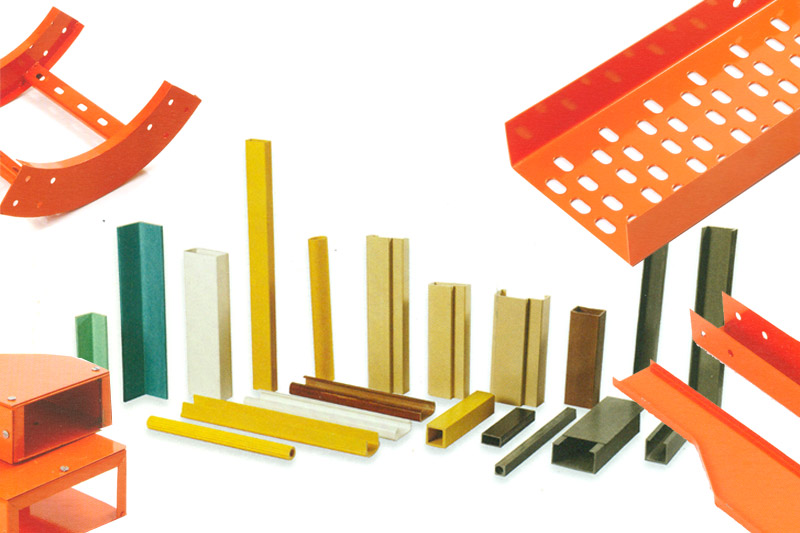
At Sharda Cable Trays, we manufacture a complete range of FRP accessories matching our ladder type, perforated, trough, and channel type cable trays.
Why Original Manufacturer Accessories Matter
- Perfect Fit: Pre-drilled holes align with tray sections
- Material Compatibility: Matching FRP properties
- Engineered Strength: Tested load ratings
- Warranty: Mixed brands void warranties
- Aesthetic: Color and finish consistency
2. Horizontal Bends
Horizontal Bend - 90°
Used when the cable tray needs to change direction by 90 degrees on the horizontal plane. Available for all tray types and widths.
- Use: Right angle turns in cable routing
- Standard Angles: 90° (most common)
- Bend Radius: 300mm, 450mm, 600mm, 900mm (must accommodate cable bend radius)
- Material: Matching FRP grade
Horizontal Bend - 45°
Used for gentler direction changes, often combined with two 45° bends to navigate around obstacles smoothly.
- Use: Diagonal routing, obstacle avoidance
- Application: When 90° bend is too aggressive
- Cable Stress: Lower than 90° bends
Bend Radius Considerations
⚠️ Critical: Cable Bend Radius
The minimum bend radius is typically 8x the cable diameter for power cables, 12x for fiber optic. Always select bends with internal radius ≥ this requirement. Forcing cables around tight bends damages insulation and reduces lifespan.
3. Vertical Bends (Inner & Outer)
Vertical Inner Bend
Used when the cable tray needs to go UP after a horizontal run, with the bend "facing inward" (cables on the inside of the curve).
- Use: Routing cables up to higher levels
- Common Applications: Multi-story buildings, cable risers
- Critical: Provides smooth transition without damaging cables
Vertical Outer Bend
Used when the cable tray transitions from horizontal to going DOWN, with the bend "facing outward" (cables on the outside of the curve).
- Use: Routing cables down to lower levels
- Common Applications: Bringing cables to floor equipment
- Important: Different geometry than inner bends
4. Tee Bends & Cross Bends
Horizontal Tee Bend
T-shaped junction for branching cables from a main run to a side branch.
- Configuration: Three connection points
- Use: Splitting cable runs to multiple destinations
- Equal/Reducing: Equal-size T's or reducing T's available
Horizontal Cross Bend
X-shaped or +-shaped junction for 4-way cable distribution.
- Configuration: Four connection points
- Use: Major cable distribution hubs
- Application: Plant rooms, electrical substations
5. Coupler Plates
The most commonly used accessory - couplers connect adjacent tray sections to form continuous runs.
| Type | Use Case | Fasteners Needed |
|---|---|---|
| Standard Coupler | Straight connections | 4 bolts (M8/M10) |
| Heavy Duty Coupler | High load applications | 6-8 bolts |
| Expansion Coupler | Long runs (thermal expansion) | 4 bolts + slot |
| Angled Coupler | Slight angle changes | 4 bolts (M10) |
6. Reducers
Used when transitioning between different tray widths in the same cable run.
Types of Reducers
- Vertical Inner Reducer: Width transition going up
- Vertical Outer Reducer: Width transition going down
- Horizontal Reducer: Width transition on flat plane
- Centered Reducer: Symmetric size reduction
- Offset Reducer: Asymmetric width transition
Common Reduction Scenarios
- 600mm → 300mm (heavy main to medium branch)
- 450mm → 300mm (gradual reduction)
- 300mm → 150mm (branch to local distribution)
- 150mm → 100mm (final equipment connection)
7. Elbows
Elbows are similar to bends but typically used for sharper angle changes or specialized applications.
- Horizontal Elbows: 90° turn with reduced length
- Vertical Elbows: 90° vertical transitions
- Custom Elbows: 30°, 60°, custom angles available
8. Support Systems (Z & C Channels)
Z-Channel Support System
Z-shaped channels used for hanging cable trays from ceilings or overhead structures.
- Material: FRP, GI, or stainless steel
- Length: Custom-cut to requirements
- Mounting: Threaded rods, brackets, anchors
- Load: Engineered for cable tray weights
C-Channel Support System
C-shaped channels primarily used for wall-mounting or as horizontal supports.
- Configuration: Open C-section
- Use: Wall brackets, horizontal supports
- Versatility: Easy to add accessories using channel nuts
9. Cable Tray Covers
Covers transform open trays into protected systems. Available types:
- Flat Covers: Standard protection
- Peaked Covers: Self-draining for outdoor use
- Ventilated Covers: With perforations for airflow
- Solid Covers: Maximum protection
- Hinged Covers: Easy maintenance access
10. Fasteners & Hardware
| Fastener Type | Common Sizes | Use |
|---|---|---|
| GI Hex Bolts | M8, M10, M12 | Tray to support connection |
| SS Hex Bolts | M8, M10, M12 | Corrosive environments |
| Threaded Rods | M10, M12 (1m, 2m, 3m) | Suspension from ceiling |
| Anchor Fasteners | M10, M12 | Wall/floor anchoring |
| U-Bolts | Various sizes | Tray to channel clamping |
| Lock Nuts | M8, M10, M12 | Vibration resistance |
| Spring Washers | Various | Maintain bolt tension |
11. Accessory Selection Guide
Step-by-Step Selection Process
- Identify Tray Type: Match accessories to ladder/perforated/trough/channel
- Determine Widths: List all tray widths in your system
- Map Route: Count direction changes, branches, reductions
- Calculate Quantities: Add 10% safety margin
- Material Grade: Match environment requirements
- Cable Bend Radius: Verify bend radii accommodate cables
📋 Sample Accessory List (100m Cable Tray Run)
- Cable trays: 100 meters
- Coupler plates: ~35 sets (every 3m)
- Horizontal bends: 8-10 (depending on route)
- Vertical bends: 2-4 (depending on levels)
- Tee bends: 2-3 (branches)
- Reducers: 1-2 (size transitions)
- Support systems: ~40-50 sets (every 2m)
- Fasteners: 500+ bolts/nuts/washers
For installation guidance on specific bend types, see our detailed guide.
Complete Cable Tray Accessories from One Source
Sharda Cable Trays manufactures the complete range of FRP cable tray accessories. Matched materials, perfect fit, engineered strength. Save time and ensure compatibility.
Request Quote View Accessories12. Frequently Asked Questions
Q1: What are cable tray accessories?
Cable tray accessories are the fittings and components used to complete a cable tray system. They include bends, couplers, reducers, tee bends and cross bends, end caps, dividers, and support systems. These accessories ensure proper installation, flexibility, and safety.
Q2: What bends are needed for cable tray installation?
Common cable tray bends include: Horizontal Bends (90° and 45° for direction changes), Vertical Inner Bends (going up while turning), Vertical Outer Bends (going down while turning), Horizontal Tee Bends (T-junction branching), Horizontal Cross Bends (4-way intersection), and Reducers (changing tray width).
Q3: How do couplers connect cable trays?
Coupler plates are used to connect adjacent cable tray sections. They are installed on the outside of the tray's side rails, with bolts passing through pre-drilled holes. Standard installation uses 4-8 bolts per coupler.
Q4: What support systems are used for cable trays?
Cable tray support systems include Z-Channel supports (for hanging from ceiling), C-Channel brackets (for wall mounting), threaded rods (for adjustable hanging), trapeze hangers (for multiple trays), wall brackets, floor stands, and anchor fasteners.
Q5: Do I need original manufacturer accessories?
Yes, using original manufacturer accessories is recommended because of perfect compatibility with the tray system, matching material properties, pre-drilled hole alignment, warranty validity, and engineered load ratings. Mixing brands can compromise structural integrity.
Q6: How do I calculate accessory quantities?
Map your complete cable route, count all direction changes (bends), branches (tees), reductions (reducers), and add 10-15% safety margin. For couplers, calculate one per joint (typically every 3 meters). For supports, every 1.5-2.5 meters.
One-Stop Source for Cable Tray Solutions
Trays, accessories, supports - everything from one trusted manufacturer in Pune, India.
Send Enquiry 📞 +91 77750 95888